A backyard pool should feel like an extension of your home, not a catalog item set in concrete. In the Upstate, that means tailoring every detail to our rolling topography, clay-heavy soils, and humid summers. When you work with an experienced pool builder in Greenville SC, you are not just buying a shell and a pump. You are investing in design stewardship, site strategy, and a long-term plan for beauty and performance.
I have walked many lots in Greenville, Spartanburg, Anderson, Lake Keowee, and even over the state line into Asheville. The terrain changes fast across short distances. One street has flat, compacted fill from a newer subdivision. The next bends around a 20-foot grade shift toward a tree line and creek. Those differences dictate how a custom pool builder should approach engineering, layout, and finishes. A good project starts with listening and measuring. A great one goes further and anticipates the next decade.
What makes a true custom pool builder
You can spot the difference between a template installation and a crafted solution in the first site walk. The custom pool builder asks about the way you live: quiet morning laps, splashy Saturday afternoons, low-light evening gatherings. They study the sun arc across the yard and the wind patterns coming off nearby hills. They note drainage lines, set-back restrictions, and the neighbor’s elevation, then sketch possibilities that work with, not against, the site.
In Greenville and surrounding cities, a pool contractor who handles both design and construction streamlines decisions. One team is accountable for hydraulic performance, structural engineering, and the finish aesthetics. If you hear hedging when you ask about soil conditions or retaining walls, that is your cue to dig deeper. The Upstate’s red clay expands when wet and contracts when dry. Pools that ignore this movement crack decks, shift coping, and test your patience. Experienced custom pool builders specify appropriate over-excavation, stone backfill, and engineered drainage. It is not glamorous, but it is the backbone of a durable pool.
The Upstate microclimate, translated into design choices
Our summers run hot and bright. Afternoon storms are brief but intense. Winters are mild with a few freezing nights. This mix shapes everything from pump sizing to material selection.
A saltwater system is often the right call for homeowners who want softer-feeling water and less weekly chemical handling. It pairs well with Greenville’s climate, provided the materials around it are selected for salt compatibility. That means marine-grade handrails and hardware, sealed masonry, and careful choice of natural stone. I have seen beautiful limestone coping eaten up by salt mist in three to five years. Dense granites, quartzites, or high-quality porcelain pavers handle the environment better.
Energy efficiency is not a throwaway line. Variable-speed pumps can shave hundreds of dollars a year, and they also lower noise, a blessing in tighter Spartanburg neighborhoods. For winter, a correctly sized heat pump paired with a solar cover can extend swimming well into October and start you early in April. Gas heaters still make sense for rapid heating on mountain-adjacent properties in Asheville where mornings start cool, but you will use them more like a boost than a constant source.
Site strategies that keep structure ahead of style
Greenville County spans everything from tight cul-de-sacs to acreage outside city lines. Common scenarios come up again and again.
Tight lots in established neighborhoods need careful access planning. A fiberglass shell might be impossible to crane without trimming mature trees or disrupting power lines. Gunite, built in place, offers flexibility and usually less logistical drama. I have staged small crews and compact equipment to preserve delicate landscaping, then used shotcrete schedules that back into neighborhood quiet hours.
Steep lots around Lake Keowee or in parts of Travelers Rest call for honest discussions about retaining walls and tiered decks. You can turn a 10-foot grade drop into a dramatic water feature wall with a spillway and integrated planters. Or you can cut a hillside flat and pay more in soil export and reinforcement. Both approaches can be right, but the structural engineering differs wildly. A swimming pool contractor with hillside experience will show you retaining details, drainage weeps, and deadman anchors, not just renderings.
High-water-table sites along creeks or lower-lying Anderson parcels need hydrostatic relief systems built in. Sumps, gravel backfill to daylight, and well-placed French drains reduce pressure under the shell. Skipping this step risks a lifted pool during heavy rains or a saturated yard that never truly dries. You will not see any of this once the deck is poured, which is why builder reputation matters.
Shapes, sizes, and what they signal about how you will use the pool
Classic rectangles earn their popularity. They align with home architecture, make automatic covers straightforward, and support true lap swimming. If you are serious about exercise, a 40-by-14-foot rectangle or a 33-by-12-foot with an integrated swim current can be tuned to your stroke length. Depth profiles matter too. A common 3.5 to 5.5 to 4-foot profile offers a comfortable transition without a deep well that eats volume and heating costs.
Freeform pools feel natural against wooded backdrops, common in Simpsonville and Greer. They soften the geometry of the home and invite curved tanning ledges and rock accents. The trick is keeping circulation efficient. A good pool builder places returns with curved runs in mind and sizes skimmers for varied flow patterns. That keeps leaves from settling in the quiet eddies near benches and steps.
Plunge pools are showing up more in Asheville and downtown Greenville where yards are compact. Think 12 by 8 feet to 18 by 10 feet, 4.5 to 5 feet deep, wrapped in a dense material like thermal bluestone or a porcelain that resists freeze-thaw. With a heat pump, a plunge can double as a hot soak in pool builders lake keowee winter, and the smaller volume makes year-round use more practical.
Finishes that hold up in the Carolinas
Interior surfaces and deck materials take a beating from UV, water chemistry, and foot traffic. Resurfacing or retiling every few years is no one’s idea of fun, so pick right the first time.
Interior plaster is the classic finish. Plain white is bright and clean, but it reveals every variance as it ages. Today’s quartz and pebble aggregates add depth and durability. A mid-gray pebble turns water a soft blue and hides minor imperfections. Black marble-inspired finishes look dramatic but run hotter under the sun and can show scale along the waterline without meticulous chemistry. A diligent owner is fine with it; a set-it-and-forget-it person should steer toward neutral tones.
Porcelain pavers outperform many natural stones in the Upstate. They resist salt, stains, and freeze-thaw cycles, and they come in formats that allow clean drainage patterns. If you love natural stone, select denser varieties like certain granites and quartzites, and have your pool contractor demonstrate sealers that breathe. Travertine is a favorite for look and feel, but softer grades can pit under salt systems and repeated wet-dry cycles. Ask to see local installations that are five or more years old.
Tile lines save headache. Six inches of waterline tile creates a durable, cleanable edge for sunscreen and pollen residue. It also gives you a design accent. Glass mosaics shimmer in morning light, but hand-check edges for lippage that can bother bare feet. It is the small touch that separates a showroom from a lived-in pool.
Lighting, sound, and the mood of your yard after dusk
Pool lighting is worth a deeper conversation than it often gets. A single bright LED at the deep end can leave the shallow shelf in shadow, making nighttime steps less intuitive. I prefer smaller, well-placed nicheless LEDs, two to four depending on the pool size, aimed to graze walls and steps. Warm whites around 3000K feel welcoming and flatter stone and wood. Color cycles are fun for a party, but the nightly hero is soft white.
Landscape lighting finishes the scene. Grazing light on a privacy hedge, a subtle uplight on a specimen maple, and a low wash along the path create layers. If you run a spillway or sheer descent, add a narrow-beam light to make the water read as a ribbon at night. The whole effect should quiet down the yard, not turn it into a stage.
For sound, water features mask road noise. In Greenville’s busier corridors, a well-tuned scupper or a shallow weir over a textured wall adds a gentle white noise that outlasts traffic waves. Go too large, and you will drown out conversation. Adjustable valves let you tune the volume season to season.
Smart controls that are actually helpful
Automation should simplify, not create homework. Modern systems let you schedule pumps, set heater targets, control lights, and adjust water features from a phone. The value is less about novelty and more about consistent maintenance. If the pump runs at a low speed during off-peak hours and bumps up automatically after a windy day, you prevent debris from becoming tomorrow’s stain.
Salt systems, pH dosing pumps, and ORP sensors can manage chemistry smoothly if they are calibrated and the pool is engineered for good circulation. The theme repeats: layout and hydraulics first, automation second. I prefer setups that give you manual overrides without forcing you through three screens of menus.
Budget ranges and where the money should go
Costs vary widely across pool types and sites. For a new in-ground pool in Greenville SC built in gunite with a basic deck and minimal features, expect a starting range around the low six figures. Add-ons shift that quickly. A full-width tanning ledge, raised wall with scuppers, porcelain deck, automation, and a heater can move the project into the mid or upper six figures, especially on sloped lots needing retaining walls.
Fiberglass shells generally start lower than custom gunite and move faster through construction. They are excellent when access permits and your desired shape fits within available molds. Vinyl-liner pools can be the most economical upfront, but liners need replacement on a cycle, often 7 to 12 years depending on care and sun exposure. Over the long arc, a well-built gunite pool with a durable finish can balance the ledger by avoiding liner cycles.
Spend first on structure and hydraulics. That means engineered walls, reliable plumbing sizes, quality valves, and a pump and filter that match the pool’s volume and use pattern. You can add a raised feature wall in a later phase. Re-plumbing a starved suction line after the deck is set is far more painful.
Permits, setbacks, and neighbor realities
Greenville, Spartanburg, and Anderson jurisdictions have their own permitting rhythms. Typical steps include site plans with setbacks, utility locates, barrier plans for safety, and sometimes tree protection. If you live near Lake Keowee, expect additional rules from community associations or shoreline management entities for docks and view corridors. Asheville introduces more stringent erosion controls on sloped sites and may require detailed stormwater plans.
Good pool builders handle these steps, but it helps to understand sequence. Surveys come first. Design aligns with setbacks and easements. Engineering stamps details for retaining and structures. Permit packets go in with a realistic schedule. Having a neighbor conversation early can prevent friction about equipment placement or temporary fence adjustments during construction.
What construction actually feels like
Time frames shift with weather and scope, but a well-run pool installation follows a recognizable arc. Layout and excavation set the footprint. Steel and plumbing go in next, forming the pool’s skeleton and arteries. Shotcrete or gunite forms the shell. Cure times matter. Rushing to finishes to shave a week can cost years off the surface life.
Tile and coping define the edges. Deck prep and pour follow, then equipment sets in a pad that allows airflow and service access. Electrical and gas tie-ins connect the heart of the system. Interior finish goes in last, followed by fill and start-up. The first 30 days are critical. Water chemistry must be babysat while the surface hydrates and stabilizes. Smart builders schedule check-ins during this break-in period and teach you or your service provider the specific start-up your finish requires.
Noise and dust levels are real during excavation, steel, and shotcrete. Crews typically manage debris daily, but expect activity. If you work from home, ask your pool contractor to map the noisiest days so you can plan accordingly. The best teams communicate clearly and keep a tidy site, a small sign that they will be equally careful with the details you cannot see.
A quick buyer’s guide for choosing among pool builders
- Ask to visit two to three completed pools that are at least three years old, ideally with similar soil and slope conditions as your yard. Request a plumbing diagram that shows pipe sizes, return locations, and equipment specs, not just brand logos. Clarify what is included in the base price versus allowances for tile, coping, and decking, so you are not pricing off placeholders. Discuss structural details for your soil type, including backfill materials, drainage strategy, and expansion control for decks. Get the service plan in writing for the first 30 days and the first year, including who balances water during start-up.
Local context across the Upstate and nearby mountains
Pool builder Greenville SC searches return a mix of specialists and generalists. Within that field, look for teams with actual hillside case studies if you live near Paris Mountain or in pockets of Five Forks that roll toward creek beds. In Spartanburg SC, older neighborhoods may have mature trees and root fields that complicate excavation and long-term deck health. Your builder should plan root barriers and subgrade reinforcement, not hope for the best.
Anderson SC has more room to breathe, with larger lots and often better access. That opens the door to larger footprints and detached pool houses. The challenge becomes wind exposure across open yards. You will want returns and skimmers set to nudge surface debris toward capture, and you may opt for a windbreak hedge or decorative screen that doubles as a privacy feature.
Lake Keowee SC projects often include views and grade changes. Protect the sight line by keeping vertical elements lower near the water and stepping them up as you approach the house. A raised beam on the uphill side can manage grade, while a vanishing-edge detail toward the view creates drama. The hydraulic design for a vanishing edge demands experience. Surge capacity in the catch basin should be sized to handle bather load and rainfall, and the system should be quiet when the edge is running at low speed during routine operation.
Asheville NC brings cooler nights and stricter erosion controls. You might combine a smaller main pool with a spa that you keep active most of the year. Natural materials like locally sourced stone blend well, but keep an eye on freeze-thaw performance. Porcelain that mimics regional stone can deliver the look with less maintenance risk at elevation.
Safety and accessibility without compromising design
Safety barriers are non-negotiable. In many Upstate jurisdictions, you need a minimum fence height, self-closing, self-latching gates, and door alarms if the home provides direct access. Inset handholds along bench edges, clearly lit steps, and non-slip deck textures make the pool safer for everyone. Tanning ledges double as play zones for toddlers when paired with removable safety fencing. For older swimmers, wide entry steps with a sturdy, well-anchored rail make a noticeable difference.
Automatic covers are excellent on rectangular pools. They retain heat, cut evaporation, and add a layer of safety when properly used. They do require a clean track and debris management to prevent binding. On freeforms, safety covers are more manual and seasonal, but still valuable. Ask your builder to show you how they look in place, not just folded up.
Water quality that respects people and surroundings
Greenville and Spartanburg deal with pollen seasons that test filters and skimmers. Oversized cartridge filters handle pollen and fine debris without the backwashing waste of some sand systems. If you prefer sand, pair it with a glass media upgrade that filters finer particles and resists channeling.
Salt systems produce chlorine on site, but you still balance pH, alkalinity, calcium hardness, and cyanuric acid carefully. The Upstate’s frequent summer rains dilute stabilizer and shift alkalinity. An auto-filler connected to a pressure-regulated line prevents the water level from fluctuating wildly. Tie that with a deck drain system that directs runoff away from the pool, not into it.
If water conservation is a priority, consider a rain garden or swale that collects deck runoff and feeds a planted zone. It is a small nod toward sustainability that also softens the hardscape visually. For chemical sensitivity, UV or ozone secondary sanitation can lower combined chloramines in heavily used pools. It is not a replacement for residual sanitizer, but it improves the feel and smell of the water.
Thoughtful features that earn their keep
A tanning ledge is the crowd-pleaser. Keep it at 9 to 12 inches of depth so loungers sit comfortably and toddlers have a secure play zone. Add umbrella sleeves and a bubblers manifold with a valve, so you can soften or silence the effect as you like.
Benches placed across from the main social zone make conversation easier. A bench along the deep edge gives confident swimmers a place to pause. If you like volleyball, set the net posts so they do not interfere with foot traffic, and keep a clear travel path around the pool.
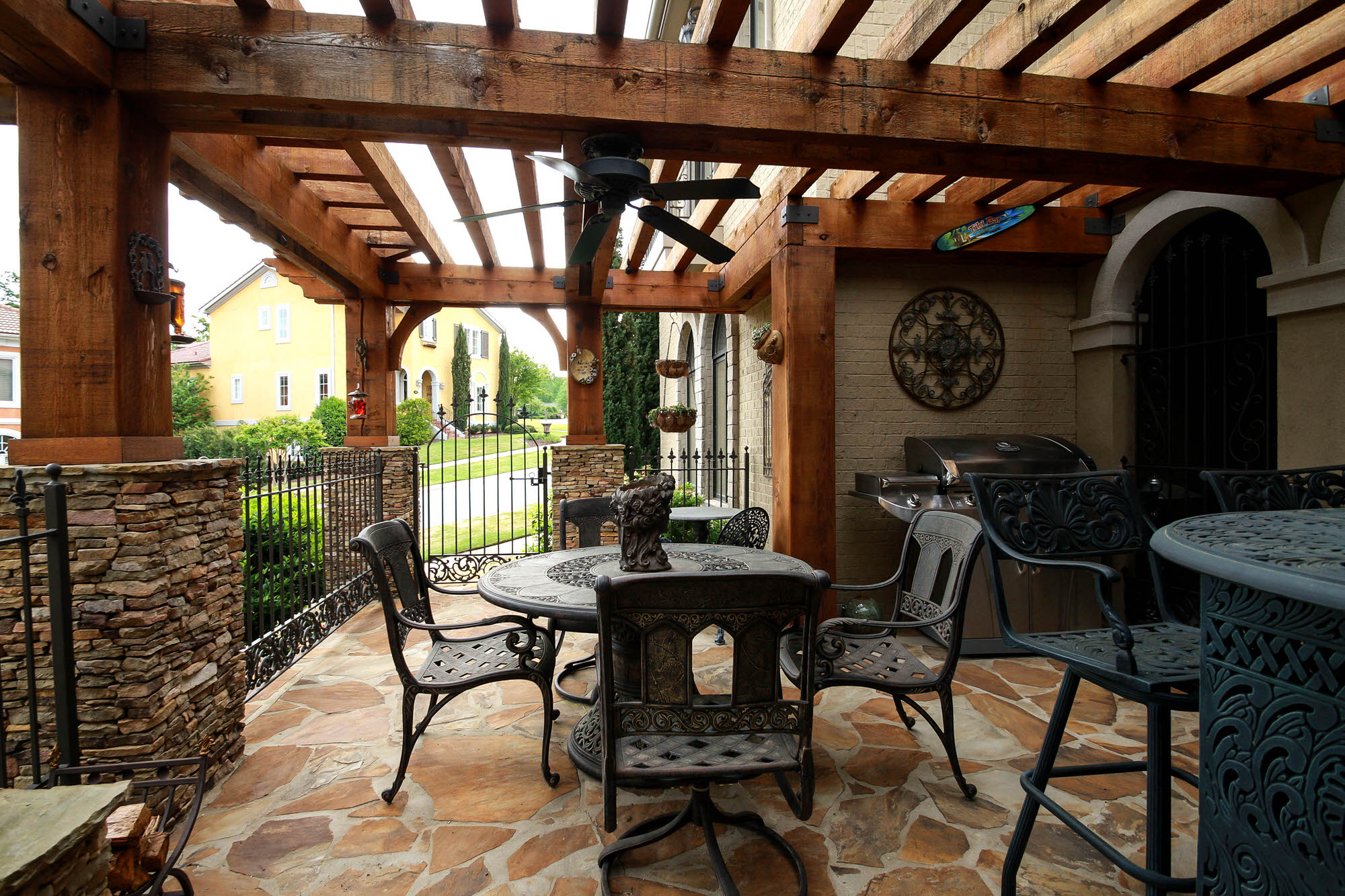
For grilling and entertaining, integrate a modest kitchen zone with counter space and shade. Separate smoke from the water so you are not rinsing soot off coping. Plan for storage near the pool: a weatherproof cabinet for chemicals and test kits, plus a tucked-away spot for toys and vacuum heads. You will appreciate the tidiness every week.
Aftercare and the long view
The first month sets the tone. For a quartz or pebble interior, brushing schedules are essential. A robot cleaner paired with a weekly manual brush keeps new surfaces from developing early scale lines. Maintain the pump’s daily low-speed cycle for circulation, then use higher speeds after storms or heavy use. Your pool contractor should hand you a schedule, not just product brochures.
Seasonally, watch for joint movement in decks and caulk transitions. Replace sealant lines before they gap and invite water intrusion. Every two to three years, reseal porous stone or refresh porcelain grout lines if needed. Every five to eight years, plan to service equipment pads: new seals on pumps, fresh cartridges or media, a check on the salt cell’s life.
If you bought a pool from a reputable pool builder in Greenville SC, they will either maintain you directly or hand you to a service partner who knows your specific setup. Keep a simple log of chemistry, equipment changes, and repairs. It helps warranty claims and protects resale value.
When to choose a specialist by location
A short note on coverage areas. Pool builder Spartanburg SC searches may surface firms that primarily work east of Greenville. That can be a benefit if your schedule needs a team with crew capacity outside Greenville’s peak season. Pool builder Anderson SC can point you to companies comfortable with larger lots and simplified access, which sometimes translates to more competitive pricing.
For lake properties, a pool builder Lake Keowee SC specialist should be your first call if you plan a vanishing edge or complex retaining. They will anticipate shoreline guidelines and the microclimate near open water. If your home is in the mountains, a pool builder Asheville NC with freeze-thaw and hillside experience will save you from costly do-overs. The best custom pool builders travel across these lines, but they carry local playbooks that matter.
The heart of the matter
A pool is one of the few home projects that changes how your days feel. Done well, it pulls family and friends outside. It cools summer air, softens neighborhood noise, and gives you a quiet place to float when the house gets loud. The right pool builder guides you through trade-offs you will not see in a rendering. They will tell you when a stunning stone will cause headache, when a deck wants another drain, and when a raised wall is doing the job a retaining wall should do.
If you want a place that reflects your vision and fits your yard, interview custom pool builders who show their math, not just their photos. Look for accountability in structure and plumbing, respect for our soils and slopes, and a design eye that suits your home. Whether you live downtown Greenville, just outside Spartanburg, on acreage in Anderson, above the water at Lake Keowee, or up in Asheville, there is a path to a pool that feels inevitable in your space. It starts with listening, a thorough plan, and craftsmanship that favors longevity over shortcuts.